
Radon is the 2nd leading cause of lung cancer in Canada
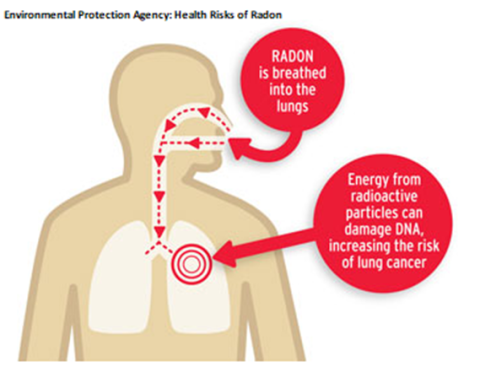
Long-term exposure to elevated radon levels in your home is the second leading cause of lung cancer (behind smoking). Radon gas is responsible for over 3,200 deaths a year in Canada.

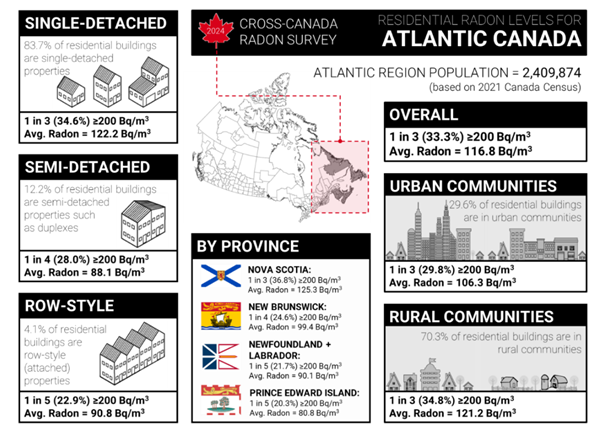
1 in 5 homes in PEI have elevated levels of radon above Health Canada levels
The 2024 Cross Canada Radon Survey found that 18% of homes in Canada have a radon level higher than 200Bq/m3 (becquerels per cubic metre). For levels above 200, Health Canada’s recommends that homeowners install a radon venting fan in their basement.

How to confirm radon levels? Have your home tested for radon.
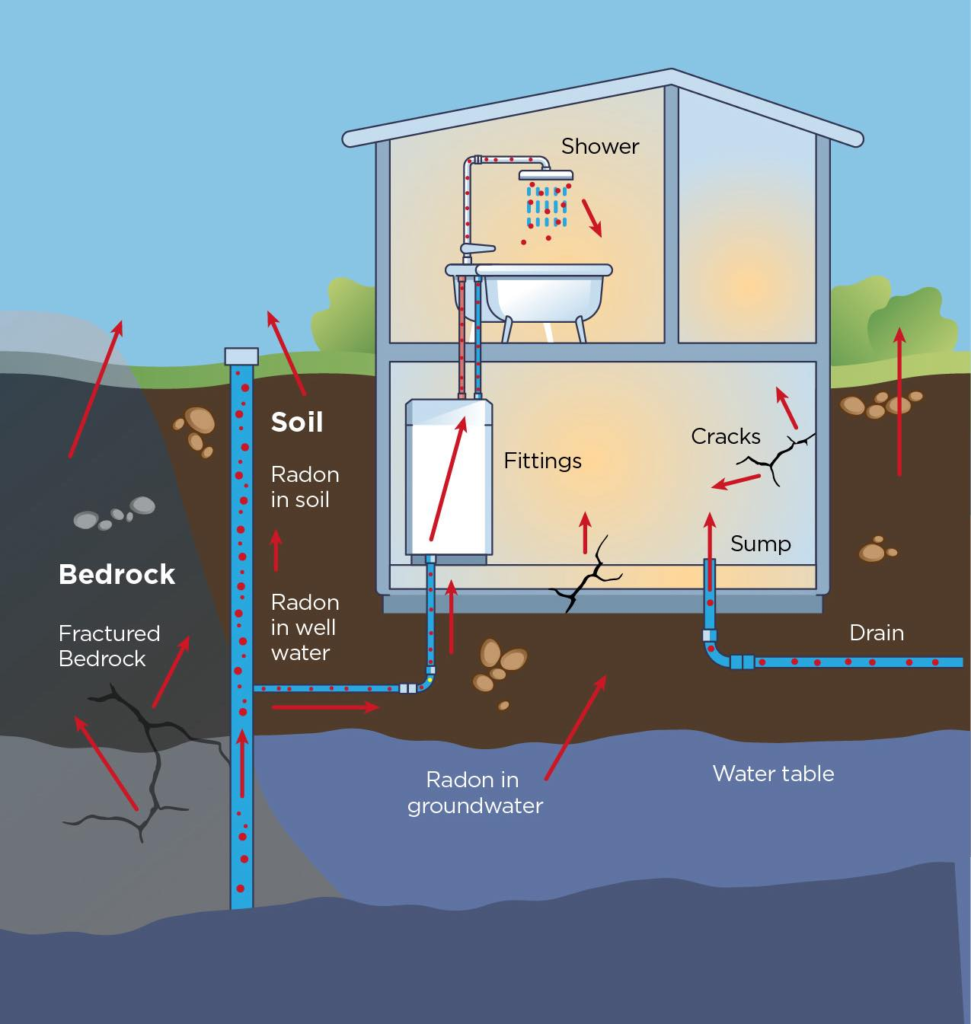
Radon is an odorless, tasteless radioactive gas that accumulates in enclosed spaces such as homes and buildings.
The only way to know there are elevated radon levels in your home … IS TO TEST FOR IT.

Why is hiring a certified professional important when it comes to radon testing?

A professionally certified radon measurement tester is obligated to conduct their radon measurement testing under the strict guidelines provided by Health Canada, C-NRPP and CARST. A certified professional is required to use professionally approved radon testing devices approved by the C-NRPP and Health Canada for the most accurate radon testing results.
There are strict quality assurance and quality control procedures to follow with testing kits for storage, installation of radon measurement equipment and testing to ensure the most accurate and reliable radon level reading in your home.
Read more about those on the Quality Assurance/Quality Control page of our website.
Being a professional radon measurement tester means continuing education and being aware of the latest technology and testing procedures. Certified radon professionals are required to complete 20 hours of continuing education every two years to keep their certification valid, including a code of ethics course from the C-NRPP.

Meet the face behind Island Radon Testing
Kelly Campbell – C-NRPP professional certified Radon Measurement Tester
Kelly Campbell is the owner of Island Radon Testing and conducts all the residential long-term and short-term radon measurement testing. Kelly is certified by the C-NRPP in residential radon measurement C-NRPP ID: CRT-202888 (Valid Through: July 1, 2027) and with CARST.
Website Link: https://c-nrpp.ca/find-a-professional/
Kelly completed his radon measurement training through the Canadian National Radon Training Centre and has completed training courses in conducting residential radon measurement tests and short-term radon measurement testing for real estate transactions.

Frequently Asked Questions
What’s the financial risk of doing radon test if my level comes back high?
It is possible that your radon levels can come back higher than the Health Canada recommended level of 200 bq/m3 (becquerels per cubic metre. One becquerel is one radioactive decay per second) However, you have ample time to take corrective action. If your radon levels are between 200 and 600bq/m3 Health Canada recommends mediation should take place within two years, and within one year for radon levels over 600bc/m3. Island Radon Testing can help walk you through the next steps if radon levels are elevated in your home.
What if I want to do the radon test myself?
There are options available if you would prefer to test for radon yourself instead of hiring a professional. Check out the bottom of our Radon Testing Services page for information and advice. Any questions, please contact us and we can talk you about your options and best way to proceed, even if you aren’t a customer.
When can I get an Island Radon Testing radon measurement done?
Island Radon Testing operates during the evenings, weekend and government holidays, which may be more ideal for your schedule not having to take time off work to have the test kit installed and picked up. If a weekday is best for your schedule, please let us know!
When is the best time of year to test for radon?
The best time to conduct a long-term radon measurement is during the heating season, between October and April. A short-term radon measurement test can be run at anytime of the year.
What if I want a short-term radon test done to see my radon levels?
Island Radon Testing can complete a short-term radon measurement test for your home. Two key things to remember with this testing option.
– A short-term radon measurement captures only a snapshot of the radon level in your home at the time of testing and must be completed in closed conditions (windows and doors kept closed whenever possible except for immediate entry/exit, limited use of dryers and fans in house other than ones used for heating of home)
– Health Canada recommends a long-term radon measurement test of at least three months to be completed after a short-term test for the most accurate radon level results in your home.
What training does a “certified professional” take?
Any radon measurement professional certified through the C-NRPP (the Canadian National Radon Proficiency Program) and CARST (the Canadian Association of Radon Scientists and Technicians) has completed a recognized training course, taken a code of ethics course and achieved at least 70% on the C-NRPP written exam. Twenty hours of continuing education is completed every two years to keep the certification valid. Check C-NRPP’s website for a list of certified professionals in Canada.
What testing equipment does Island Radon Testing use?
Island Radon Testing uses testing equipment approved for professionals by Health Canada and the C-NRPP. Check the C-NRPP website for a list of certified equipment. Island Radon Testing uses the Accustar AT100 Alpha Tracker for long-term radon measurement tests and the Corentium Pro continuous radon monitor for its short-term testing.
Island radon testing
Follow Island Radon Testing on Facebook